

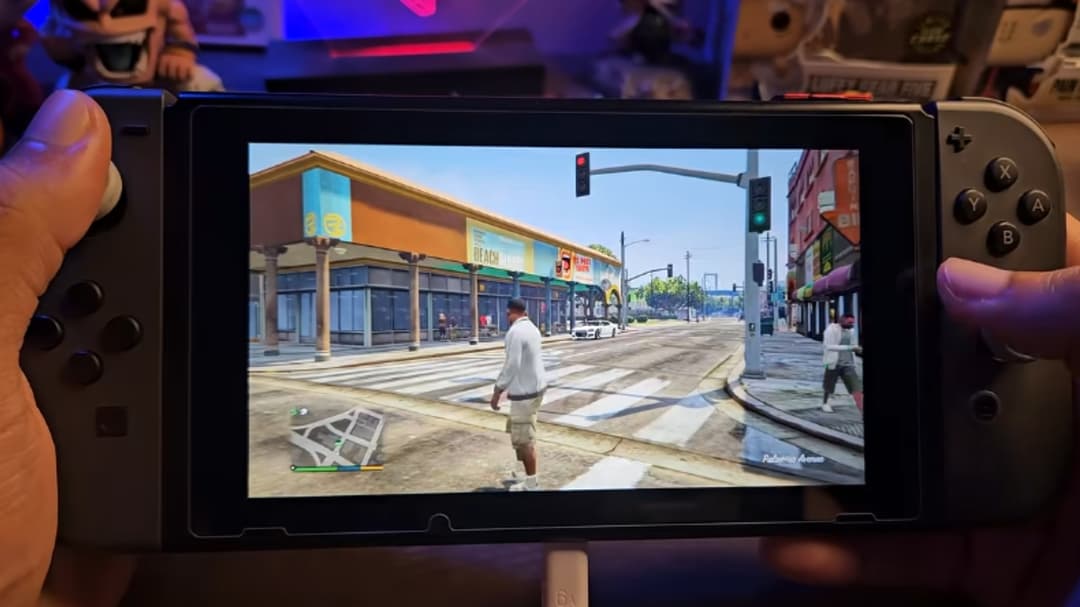
The modding group behind an unofficial Nintendo Switch port of Grand Theft Auto V says it will shut down on October 3, following reported legal action from Take-Two Interactive, the parent company of Rockstar Games.
Grand Theft Auto V has never shipped on the original Switch. A team calling itself Paralympics Productions brought Los Santos to the console anyway, and the project drew attention for running directly on Nintendo's hardware rather than through a streaming service. It was reported to have been built on leaked Grand Theft Auto V source code.
On September 28 the mod's lead developer, who goes by M0jso, said in a post on X that the group would close on October 3, thanking supporters and apologising for leaving their expectations unfulfilled.
I am thankful for Take-Two's mercy, so this is the definitive end.
The developer also pushed back when another user suggested Take-Two would lose if the dispute reached court. M0jso replied that they would most likely not win in court, saying the company had solid grounds and that their own conduct would undermine any argument that they had not understood what they were getting into.
What the port ran on
As VideoCardz reported earlier in September, the port ran natively on the Switch's operating system, without relying on streaming, Android or Linux. It required a modified console. Performance was reported at roughly 10 to 25 frames per second without overclocking, while an overclocked Switch OLED could reach about 30fps in less demanding scenes, with further drops in busier areas.
Take-Two and Grand Theft Auto fan projects
The closure follows several earlier clashes over Grand Theft Auto fan work. In January 2025, the creators of the Liberty City Preservation Project took their Grand Theft Auto V mod offline after speaking with Rockstar. In 2023, Take-Two issued takedowns against Sentient Streets, an AI-powered Grand Theft Auto V mod that let players speak to non-player characters through their microphones.
The publisher has also gone to court over fan work: it filed a lawsuit in 2021 against the developers behind reverse-engineered versions of Grand Theft Auto III and Vice City, and settled the case in 2023.