





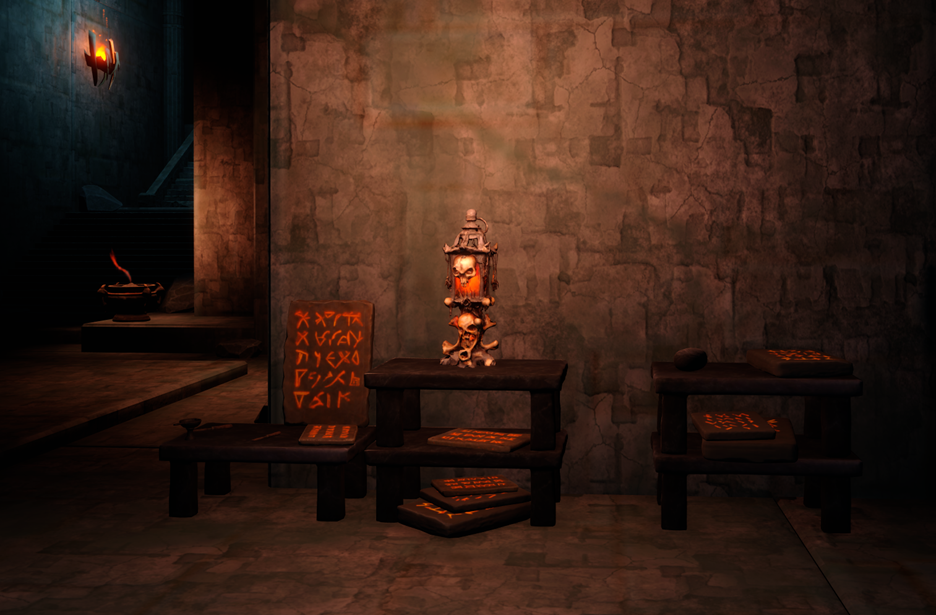
Visionary Realms used a June 6 dev diary to walk through Pantheon: Rise of the Fallen's Perception system, splitting the post between a design argument for open-ended discovery and a technical account of how the feature is built. The diary was written by creative director Chris 'Joppa' Perkins and a developer credited as Nephele, and it ties the system directly to the studio's upcoming Ashbreathers content release.
Perkins framed the system as a reaction against what he described as the standard MMO content loop: collect a batch of quests at a hub, follow a minimap between objectives, turn everything in at once, then repeat at the next hub. He argued that the pattern has turned game worlds into a curated sequence of tasks rather than places to explore, and questioned what players are actually discovering when the route is mapped out for them in advance.
The alternative the studio described is a world that does not signpost its content. Perkins wrote that the team is comfortable with players missing things they did not look hard enough to find, and gave an example of a player talking to a cook's assistant in Demith and, as a result, a friend being offered a quest involving a wind nomad in Silent Plains. Chests opened, enemies killed, dialogue choices and places visited can all feed into what a character is subsequently offered.
Flags, checks and triggers
The second half of the diary, credited to Nephele, described what sits beneath that design. Perception is a system of character flags, checks and triggers that record what a player has and has not done, and then reacts accordingly. The parameters the team can test against include whether a quest was found and finished or is still in progress, whether a particular NPC was killed, whether the player is carrying a given item, whether a treasure container was looted, and whether an area has been visited. Those conditions can be evaluated alone or in combination.
The stated payoff is content that responds to the player rather than sitting inertly in the world. Nephele listed hidden treasure, obscure quests and secret encounters with powerful enemies as things the system can gate, along with reactive events such as an ambush while investigating a theft for a merchant's guild, or NPCs behaving differently toward a player who has found a particular item. A routine fight against local bandits, the post said, can turn into a trail of clues about an older mystery.
Nephele also positioned the system as an answer to a long-standing MMO problem: once a piece of content is found, it tends to be documented in a video or on a website, and the sense of discovery evaporates for everyone who arrives afterward. Because Perception can vary one character's path from another's, the post argued, later players retain some of that experience.
The trade-off is authoring cost. The post acknowledged that building content this way is considerably more involved than setting up a straightforward quest. For the Ashbreathers release specifically, the team said much of its recent Perception work has gone into expanding the set of flags and triggers to cover the scenarios the new content requires, including new functionality for checking the status of individual quest objectives rather than whole quests. Perkins pointed to the Smoldering Trenches and Ashbreather Enclave as the place players will see the system at work.