





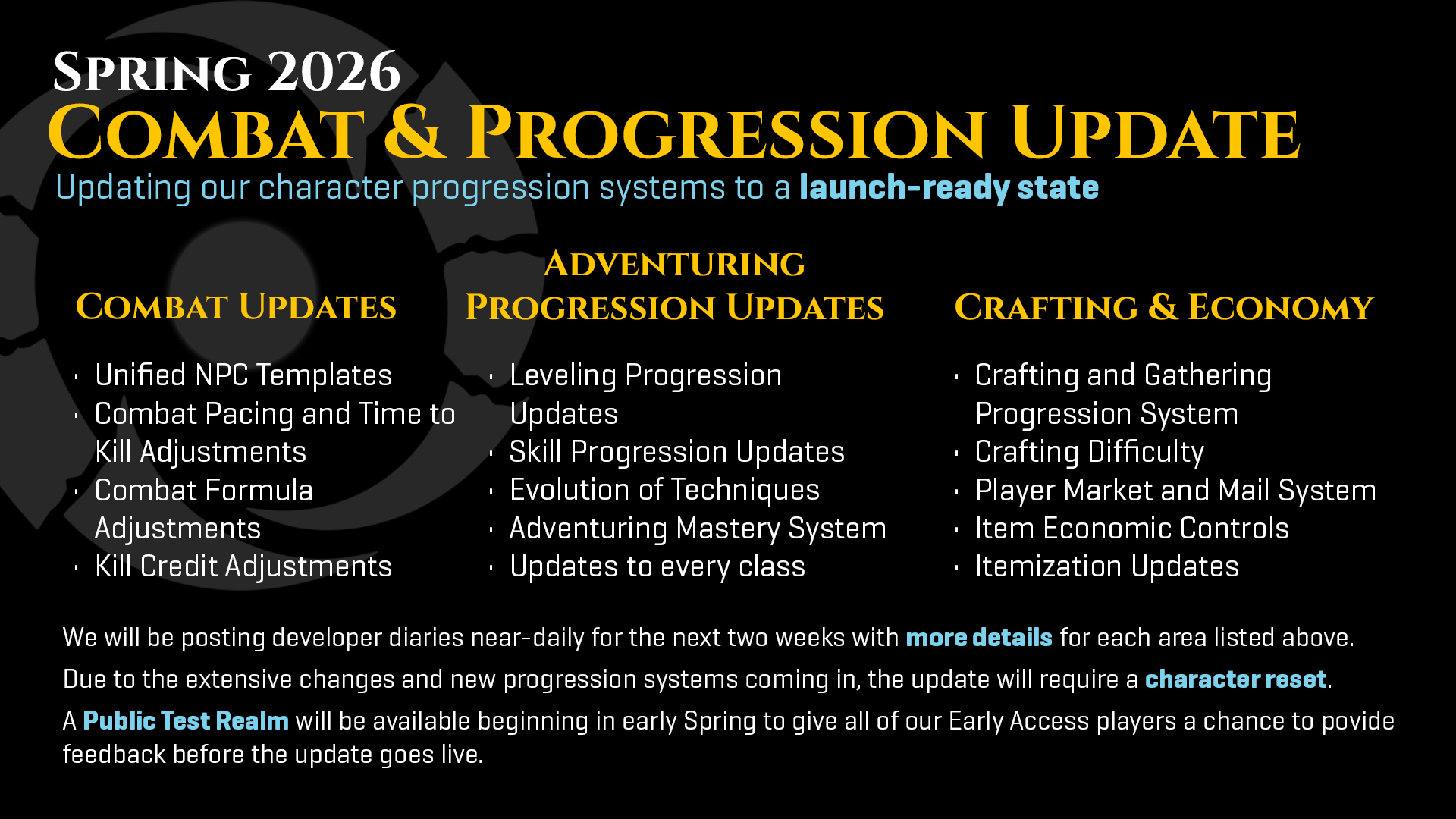
Visionary Realms opened a run of developer communications on December 8 with an overview of the Combat and Progression Update, a spring 2026 release for Pantheon: Rise of the Fallen that will arrive alongside the Badia de Cara zone and the systems supporting it. The studio described the update as the point at which combat and character progression reach the form intended for the game's full launch.
That carries a cost the team addressed directly: the update ships with a character reset, and every player will have to roll a new character. The progression changes are extensive enough to render most existing character data obsolete, the studio said, leaving no way to migrate old characters into the new systems. It acknowledged the decision would upset players who have invested time in their characters and said no alternative was available as the game moves toward its 1.0 launch. Developer diaries covering individual areas were promised on a near-daily basis over the following two weeks.
Rebalancing who content is for
The stated goal is to erase the hard divides between solo, small group and full group content so groups can form more organically. Fighting a single NPC alone is meant to become harder than it is now, offset by more tools for players and larger experience and loot rewards per fight. The studio said a year of data and observation led it to conclude its approach to challenge had severely limited accessibility for solo players and small groups, while insisting Pantheon remains a group-centric game with room for both.
Mechanically, that starts with collapsing the current split between solo and group NPCs into a single difficulty type, with only named and rare NPCs, major bosses and multi-group bosses sitting outside it. A normal NPC's difficulty will hinge largely on its level relative to the player, and the team said it will raise the challenge of specific areas through NPC density, synergy between NPC types and the environment itself rather than through creature tags.
Time-to-kill is going up for most NPCs, shifting combat away from rapid clearing and toward sustainability, resource management and wider use of a class toolkit. Experience gains are being adjusted to match, smoothing the curve in the low-mid and mid levels and granting more per kill. Kill credit also moves to a first-to-engage model to handle contested areas, though the studio said certain world bosses and special encounters will keep the most-damage-done rule where direct competition is part of the design.
Horizontal progression
On the progression side, the update is meant to refine existing systems and add horizontal paths alongside the vertical climb of levels and gear upgrades. The team pointed to Mastery, skill leveling, weapon choice and acquired techniques as the levers players will use to shape a playstyle and specialize within a chosen class.